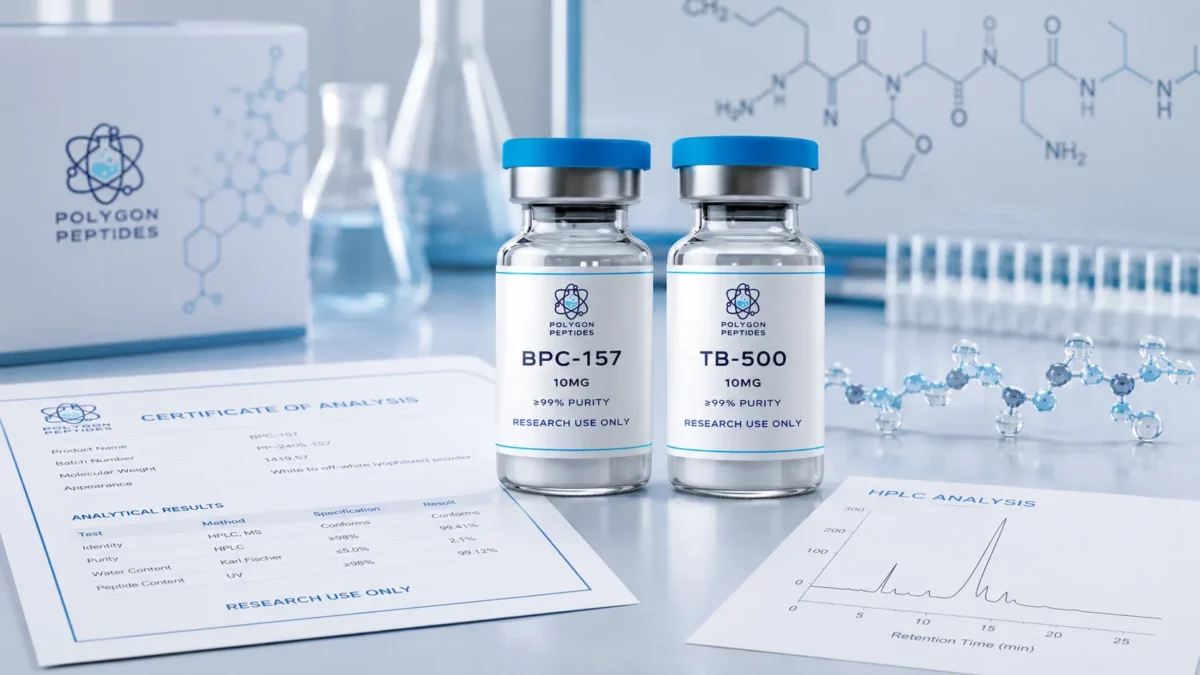
BPC 157 vs TB 500 is a common comparison in peptide research. Both peptides appear in tissue response, repair-pathway, and preclinical study discussions. However, they are not the same compound.
BPC-157 is a synthetic 15-amino acid peptide. TB-500 is commonly linked with thymosin beta-4 research, which is studied in cell movement and tissue remodelling models.
This guide explains the key differences in simple research-focused language. It does not give human dosage, medical advice, injection guidance, or treatment claims.
Quick Comparison
| Point | BPC-157 | TB-500 |
|---|---|---|
| Peptide type | 15-amino acid synthetic peptide | Thymosin beta-4 related peptide |
| Common research focus | Tissue models, gut models, angiogenesis pathways | Cell migration, actin activity, tissue remodelling |
| Search interest | bpc-157 peptide, bpc 157 dosage, bpc 157 side effects | tb-500 peptide, tb 500 dosage, tb 500 benefits |
| Blend use | Often paired with TB-500 | Often paired with BPC-157 |
| Best research use | Single-compound or comparison studies | Single-compound or blend studies |
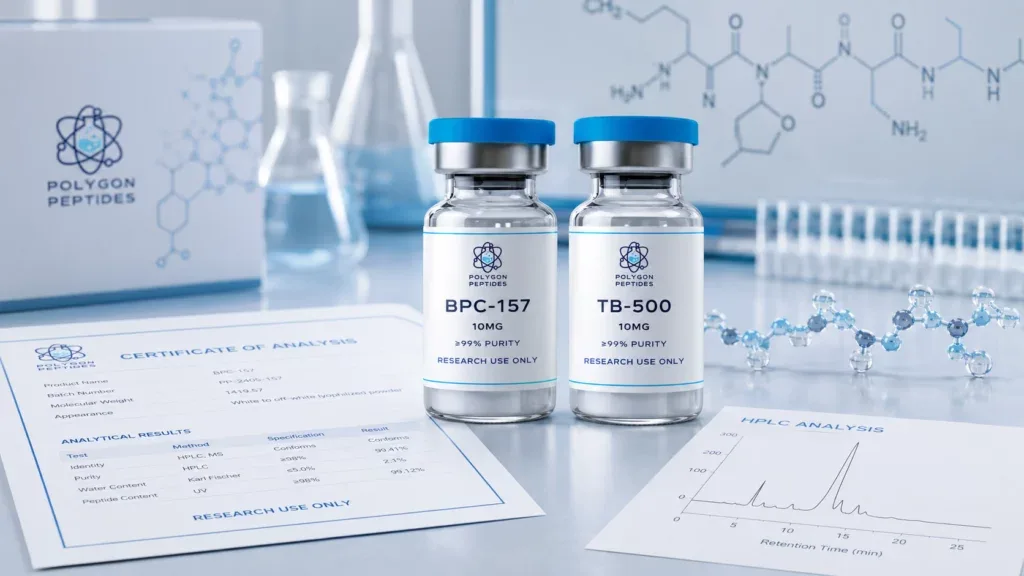
Researchers comparing single compounds can review Polygon’s BPC 157 10mg research peptide. For combined research interest, Polygon also lists Wolverine Blend 20mg with BPC-157 and TB-500.
What Is BPC-157?
BPC-157 is short for Body Protection Compound 157. It is often studied in preclinical models linked with tissue response, tendon fibroblasts, gut pathways, and angiogenesis.
Many people search for terms like bpc 157 dosage, bpc 157 before and after, bpc 157 side effects, bpc 157 oral, and bpc 157 capsules. However, those searches are usually consumer-style searches.
For research content, the safer focus is compound identity, study models, purity, COA testing, and laboratory handling.
A PubMed-listed study explored BPC-157 in tendon fibroblast and tendon explant models. A wider BPC-157 scoping review also discusses current research interest and evidence limits.
What Is TB-500?
TB-500 is commonly discussed as a research peptide related to thymosin beta-4. It appears in research around cell migration, actin regulation, and tissue remodelling pathways.
This makes TB-500 different from BPC-157. BPC-157 is often linked with gut and soft tissue research models. TB-500 is more connected with cellular movement and repair-pathway studies.
So, the better question is not “which one is better?” The better research question is: which peptide fits the study model?
Researchers can also review thymosin beta-4 research through this PubMed research review.
BPC 157 and TB 500 Blend
The keyword bpc 157 and tb 500 is popular because researchers often compare or combine both peptides.
A single peptide study is easier to measure. For example, if only BPC-157 is used, results are easier to connect with BPC-157. The same applies to TB-500.
A BPC 157 TB 500 blend may support combined pathway research. However, blends can make results harder to separate. Researchers need stronger controls, clear endpoints, and proper documentation.
For blend-based research interest, Polygon’s Wolverine Blend 20mg is the most relevant internal product page.
About BPC 157 Dosage and TB 500 Dosage
Many searches include bpc 157 dosage, bpc-157 dosage, bpc 157 dosing, tb 500 dosage, bpc 157 dosage calculator, and bpc-157 + tb-500 blend dosage calculator.
However, Polygon Peptides should not provide human dosage advice. These products are for laboratory and scientific research only.
Researchers can use the Polygon Peptide Calculator for research concentration and reconstitution planning. This external peptide dosage calculator reference may also help explain calculation logic, but it should not be used as medical advice.
What About Side Effects and Before-and-After Claims?
Searches like bpc 157 side effects and bpc 157 before and after are common, but they are not strong research evidence.
Before-and-after claims are usually anecdotal. They are not controlled studies. Also, side-effect discussions can become medical advice if handled badly.
For a research supplier, the better focus is:
compound purity
HPLC testing
COA availability
storage conditions
research limitations
batch traceability
laboratory handling
This keeps the article useful and compliant.
Quality Checklist for Researchers
Before comparing BPC 157 vs TB 500, researchers should check:
peptide identity
declared quantity
purity level
HPLC testing
COA availability
batch information
storage guidance
research-use-only label
supplier transparency
The “best BPC 157” is not the one with the biggest claims. For research, the better option is the peptide with clear testing, trusted documentation, and safe research-only positioning.
Researchers can also browse the wider Polygon Peptides shop for available research compounds.
 Final Thoughts
BPC 157 vs TB 500 is an important comparison for researchers, but the two peptides are not identical.
BPC-157 is often studied in tissue, gut, and angiogenesis-related models. TB-500 is more connected with thymosin beta-4 style research, cell migration, and tissue remodelling.
For cleaner results, researchers may choose a single compound. For combined pathway studies, a BPC 157 and TB 500 blend may be useful. However, blend research needs stronger controls and better documentation.
All Polygon Peptides products are for laboratory and scientific research use only. They are not for human consumption, medical treatment, or veterinary use.