introduction :
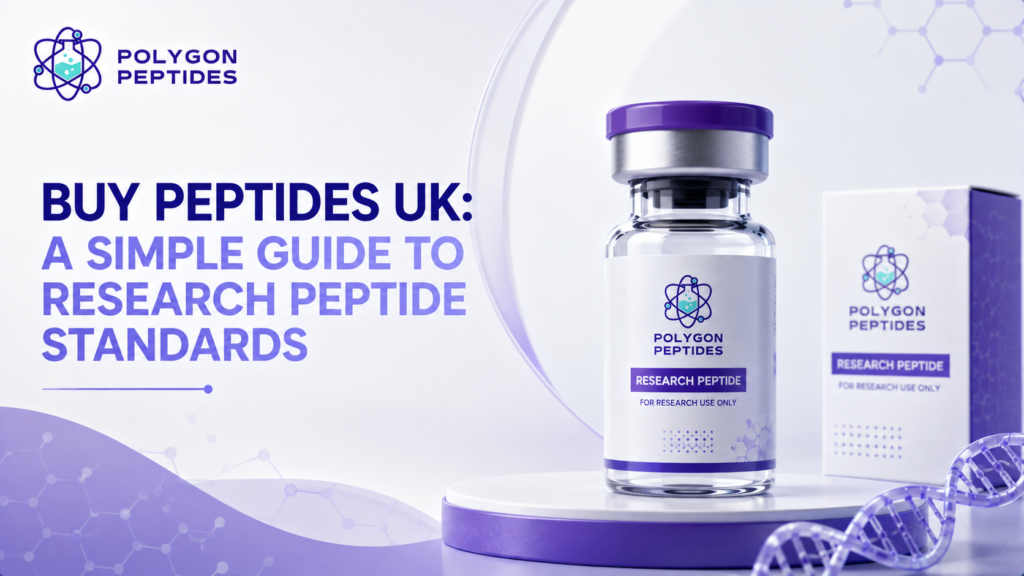
Researchers can soon encounter a cluttered mix of product listings, purity percentages, testing badges, technical terminology, and audacious quality claims while searching for buy peptides uk. Finding research peptides is not as difficult as figuring out which data genuinely helps evaluate a substance. A more meaningful evaluation is enhanced by product identity, analytical testing, batch documentation, traceability, storage recommendations, and responsible supplier communication. To help researchers look past eye-catching statistics and focus on data relevant to laboratory work, this handbook outlines those requirements in simple terms.
Quick answer:
What Are Research Peptide Standards?
A single paper or a single universal percentage does not adequately describe research peptide standards. In order to comprehend what a substance is and how it has been described, researchers really assess a number of related pieces of information.
If you’re looking for where to buy peptides uk, you can run into vendors with wildly disparate levels of documentation.
Product identification, analytical data, batch details, Certificates of Analysis (COAs), vial information, and storage recommendations are examples of useful information.
Consistency is the key concept. Together with its analytical records and physical identification, the content on a product page should make sense.
Why Quality Standards Matter in Peptide Research
Knowing as much as is practically possible about the material used in an experiment is essential to research. Interpreting experimental observations may become more challenging if identity or documentation is unclear.
Because of this, researchers searching for the best place to buy peptides uk should not define “best” solely by cost, popularity, or a headline purity %. Whether the existing evidence meets the needs of the specific research project is a more helpful issue.
Reproducibility is also supported by standards. Later work can be compared to a clearer record when laboratories maintain reliable information regarding batches and analytical paperwork.
What Defines a High-Quality Research Peptide?
Identity is the first step in a quality assessment. It should be possible for researchers to identify the precise substance being described and link it to pertinent technical data.
When consumers search for where can I buy peptides, they may see product pages with a startling lack of distinguishing details and complex scientific jargon. Some useful criteria could be the compound’s name, sequence, molecular formula, molecular weight, quantity, physical form, and batch identifier.
Quality cannot be proven in a single field. However, when taken as a whole, these specifics provide a basis for assessing analytical evidence.
Understanding Peptide Purity and HPLC Testing
Purity of the peptide is one of the most important considerations in marketing a peptide, though it should be noted that purity alone is not enough.
An analysis may use high-performance liquid chromatography (HPLC). When researchers can tie a reported percentage to an analytical result instead of just looking at the number, the percentage becomes more relevant.
Therefore, when looking at buy peptides online uk ads, researchers should not instantly assume that 99.5% is a superior research option to 98.8%. Documentation, batch relevance, identification, and analytical context are still important
Only when scholars comprehend what a precise-looking percentage represents can it be considered evidence.
Mass Spectrometry and Peptide Identity
Purity and identity answer different questions.
While mass spectrometry can provide evidence on chemical identity by assessing mass-related features, chromatographic analysis can assist researchers in examining purity.
Therefore, researchers should look beyond the term “lab tested” while learning how to buy peptides for valid laboratory work. A more helpful evaluation asks what was assessed, which analytical techniques were applied, and what conclusions the supplied data can plausibly support.
Evidence should be clarified, not replaced, by scientific nomenclature.
Certificate of Analysis: What Researchers Should Check
Several crucial pieces of product information can be combined into a Certificate of Analysis. But what it really contains determines its worth.
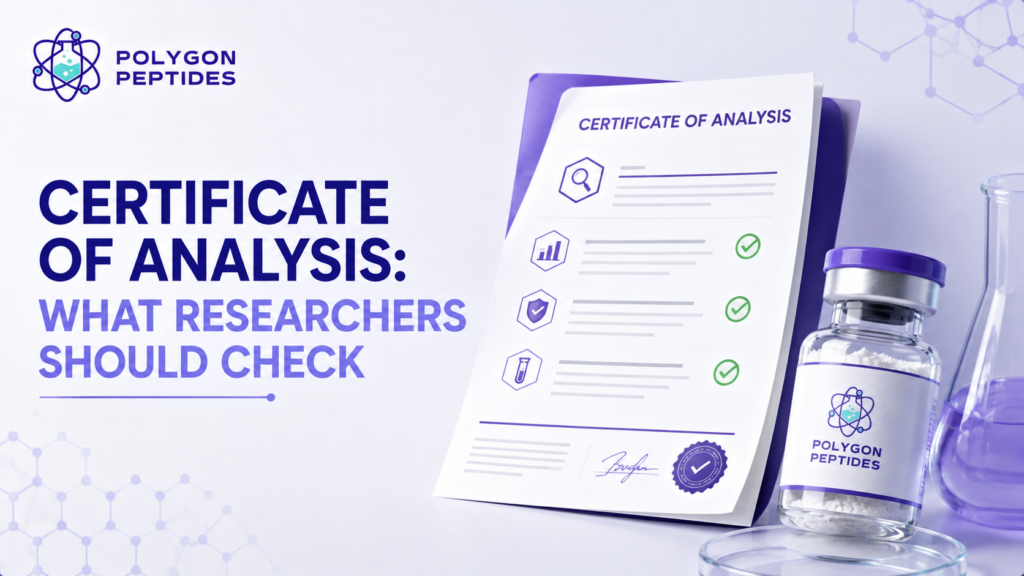
Identifying the substance and batch, outlining analytical techniques, offering parameters, displaying testing data, and reporting outcomes are all possible features of a helpful COA. These details should be compared to the material being studied by researchers.
Suppliers may be ranked based on product range or ease of use in articles on the best websites to buy peptides. The accessibility and lucidity of supporting documentation can be significantly more important from a research standpoint.
Never consider a COA badge to be the whole evaluation of quality.
Batch-Specific Testing and Product Traceability
Think of a case whereby the supplier shows a very good analytical report for the batch that had been analyzed before, but what is being shown now has another batch number. Despite the fact that the report is genuine, researchers have to ascertain whether it represents what they are viewing.
Buy peptides near me might highlight accessibility and ease of delivery. Traceability is not established by either.
A link between the substance, its analytical data, and later laboratory records can be established with the aid of batch-specific documentation. Along with receiving dates, storage records, experimental paperwork, and other data needed by their protocols, researchers can save the pertinent batch number.
Peptide Labels, Storage, and Handling Standards
Researchers should be able to identify a vial without having to speculate about its contents.
The compound name, quantity, batch or lot identifier, storage details, and suitable research-use language may be included on a label, depending on the material. These details ought to match the supporting documentation.
Storage recommendations should be taken into consideration by researchers looking into buy peptides united kingdom. Instead of using a single general storage assumption for all peptides, laboratories should adhere to pertinent paperwork and established protocols because various materials may have distinct requirements.
After a material arrives, accurate records are still important.
Research-Grade vs Pharmaceutical-Grade Peptides
“Pharmaceutical grade” and “research grade” should not be used interchangeably in marketing.
Research materials are not always approved medications; they may be provided for laboratory research. Pharmaceutical products function under manufacturing and regulatory frameworks that are pertinent to their intended use and approved status.
Before making an order peptides online purchase, researchers should be informed about the type of material being offered. Researchers should be aware of the kind of material being offered before placing an online order for peptides.
When a chemical is also discussed in medical contexts, this distinction becomes especially crucial.
How Can Researchers Verify Supplier Quality Claims?
Start with claims that can be checked.
Researchers can search for matching analytical proof if a provider claims that a peptide has a specific purity. The batch identifier should be traceable through the accessible documentation if batch testing is promoted.
Researchers can compare product specs, labels, COAs, storage details, and analytical reports for consistency when examining peptides order online outcomes.
Clear, research-focused material is meant to support an evidence-based assessment at Polygon Peptides. However, researchers should conduct their own due diligence in accordance with the specifications of their project and laboratory.
Evaluation is made easier by transparency, but it is still necessary.
Scientific Evidence vs Marketing Claims
Unless they are backed up by substantial facts, terms like “premium,” “superior,” “ultra pure,” and “industry leading” are promotional descriptions.
When a researcher asks, Can you order peptides online?” they should distinguish between the straightforward availability of a material and inquiries concerning its quality, suitability for research, and regulatory requirements.
Even a well-designed website may offer insufficient scientific data. On the other hand, rather uninteresting documents such as batch records, analytical data, specifications, and consistent product information may contain the strongest proof.
Measurable data should be given more weight than persuasive adjectives when making research judgments.
UK Regulatory Context for Research Peptides
Since peptides comprise a wide range of substances, it is unsafe to simplify their regulatory context to a single statement that can be applied to all products and intended uses.
Current UK regulatory information pertinent to their particular material, institution, and planned research should be consulted by researchers. Depending on the substance’s nature and intended usage, requirements may vary.
Searches such as tirzepatide uk buy online illustrate why context matters. The significance of context is illustrated by queries such as tirzepatide uk purchase online. Tirzepatide is associated with authorized drugs, yet a compound marketed for research purposes should not be considered to have the same production, quality, or regulatory standing as a licensed medication.
Authoritative regulatory information cannot be replaced by commercial search results.
Research Peptides vs Approved Medicines
Even if a molecule isn’t an approved medication, it can still be of interest to researchers.
Because it is still under investigation, retatrutide offers a significant example. Researchers should discern between statements that might suggest proven clinical authorization and scientific research information when they come across buy retatrutide uk content. 
Similarly, pages appearing for retatrutide uk buy online uk may use commercial language that says little about regulatory status or scientific suitability.
When a compound’s regulatory status is pertinent to their study, researchers should confirm current information using reliable sources.
Experimental Compounds Require Responsible Interpretation
Long before solid clinical data backs up the claims made about them, some chemicals build a solid internet reputation.
For instance, researchers may come across confident claims regarding biological or health effects when conducting buy bpc 157 searches. Results from experiments shouldn’t be simply turned into proven advantages for people.
When evaluating a bpc-157 shop, the same caution should be used. Dramatic claims are not as useful as product identity, analytical documentation, traceability, and responsible research communication as quality indicators.
Instead of converting doubt into certainty, a supplier should explain the limitations of the evidence that is currently available.
A Comparison: When the Higher Purity Number Tells Less
Consider two hypothetical research peptide listings.
98.9% purity is reported in the first. Researchers can examine an identifiable batch number, matching COA, chromatographic data, analytical proof connected to identity, unambiguous product details, and suitable storage information beside that figure.
The second clearly identifies itself as “premium laboratory quality” and reports 99.6% purity. However, there is no clear link between the analytical report and the present batch, and its supporting data mostly consists of a generic testing statement.
In the case where 99.6% is greater than 98.9%, the second product seems to be better at first sight.
But scientifically, it is not that easy.
Researchers can assess the content using additional information from the first listing. This does not demonstrate that the second material is of lower quality or that it is intrinsically better. It illustrates how a purity percentage should be seen as one part of a larger body of data.
Common Quality Red Flags Researchers Should Recognize
Instead of searching for a single universal warning sign, researchers perusing a peptide shop uk should focus on outstanding questions.
Uncertain compound identity, generic analytical reports, missing batch identities, unexplained purity statistics, inconsistent vial information, no storage instructions, or paperwork that conflicts with the product site are examples of potential issues.
A peptide shop online can likewise include a lot of promotional content but not much technical information. Polished branding and catalog size are not analytical benchmarks.
Poor quality is not often established by a single missing detail. It does point to anything that has to be clarified before the content is deemed appropriate for a certain study need.
What Makes a Research Peptide Supplier Trustworthy?
Trust is built through consistency.
A provider should avoid passing off experimental chemicals as proven treatments, maintain helpful batch records, explain available analytical data, and clearly express product identity.
Convenient options may be found by searching for a peptide shop near me, but location cannot exhibit these attributes.
Consistency within the larger repertoire should also be examined by researchers. Further research might be beneficial if technical details are clear for one product but unclear for the majority of others.
Polygon Peptides is in favor of a documentation-led strategy that keeps responsible scientific communication and research data at the forefront of product evaluation.
Quick Research Peptide Standards Checklist
Before assessing a research material, make sure that its identity is described properly and that the analytical data that is currently available offers helpful context for identity and purity.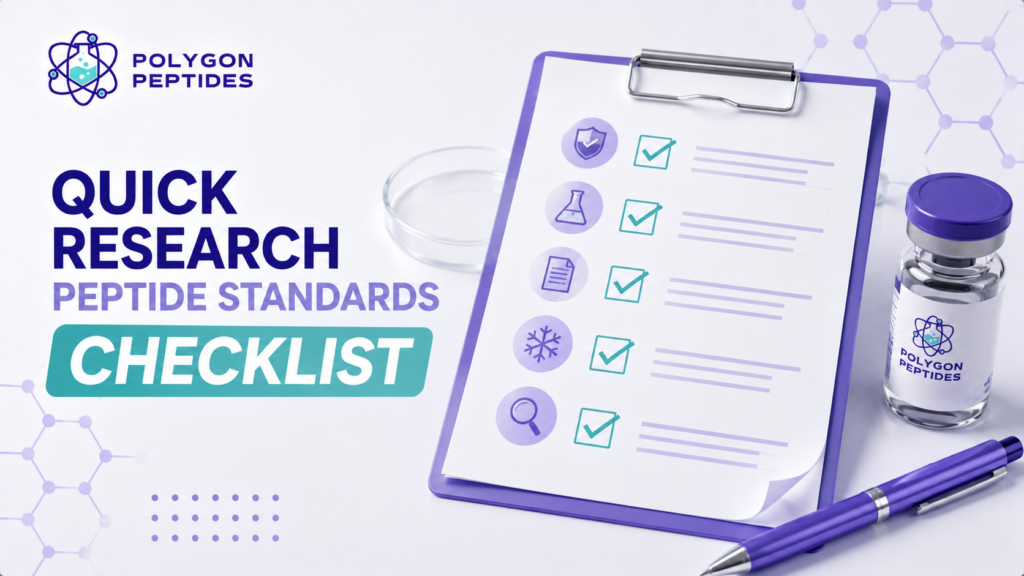
Examine the COA to see if it pertains to the pertinent batch. Check for consistency between the vial information, product description, and batch identifier.
Verify whether the laboratory can adhere to the pertinent regulations and whether suitable storage guidelines are available.
Lastly, keep promotional language and verified evidence apart. A thorough evaluation should not be replaced by a handy listing, alluring pricing, extensive inventory, or remarkable purity %.
Final Thoughts: Better Standards Support Better Research
Building confidence through related knowledge is the ultimate goal of research peptide standards. Each of these factors—identity, purity analysis, mass-related characterization, COAs, batch traceability, labels, storage information, responsible communication, and regulatory awareness—contributes uniquely.
It is not advisable for researchers to look for a single magic number that indicates quality. Examining if the evidence presents a coherent and clear picture of the subject is a more effective strategy.
Good research decisions start with well-crafted questions, meticulous documentation, and a readiness to look beyond marketing.
Sources and References
Medicines and Healthcare products Regulatory Agency (MHRA) — UK regulatory guidelines about pharmaceuticals, clinical research, and experimental items.
GOV.UK — Official UK information relating to medicines regulation and clinical research requirements. International quality guidelines for pharmaceutical development, analytical techniques, and associated quality principles are provided by the
International Council for Harmonization (ICH). — Pharmaceutical development, analytical techniques, and associated quality principles are all covered by international quality guidelines.
U.S. Food and Drug Administration (FDA) — Resources from science and regulation that are pertinent to peptide drug products, analytical evaluation, and pharmaceutical quality.
Peer-reviewed scientific literature — supporting scientific foundation in analytical testing, mass spectrometry, chromatography, peptide characterisation, and laboratory quality evaluation.
Since scientific and regulatory knowledge can change, researchers should refer to the most recent primary guidelines and institutional regulations pertinent to the specific substance and research activity.
About the Author
Polygon Peptides Editorial Team
The Polygon Peptides Editorial Team creates instructional materials on biotechnology, laboratory documentation, analytical testing, and peptide research. The group encourages evidence-based and ethical research methods while concentrating on understandably communicating technical topics.
This information should not be regarded as legal or medical advice; rather, it is meant to be instructive and informative.
FREQUENTLY ASKED QUESTIONS
No. One component of an evaluation is purity. Additionally, identity, analytical techniques, batch-specific documentation, traceability, and other pertinent requirements should be taken into account by researchers.
Organized details regarding the substance, batch, analytical techniques, specifications, and reported results can be found in a COA. The information supplied and if it aligns with the pertinent content determine how useful it is.
By connecting reported analytical results with the specific substance under evaluation, batch-specific documentation facilitates the creation of a more transparent traceability record.
Not always. Identity, purity, analytical quality, and documentation standards cannot be shown by price alone. Researchers ought to evaluate the supporting data.
Clear product identification, pertinent analytical proof, batch-linked COAs, consistent vial information, storage guidelines, traceability, responsible claims, and relevant research needs are all important factors to take into account.