Introduction
Semaglutide is one of the most well-known peptide compounds in contemporary metabolism science. When scientists are considering semaglutide research peptides, there is more to consider than the compound itself. The compound identity, its molecular features, documentation of the product, and research use of the product can be important factors when evaluating the product for laboratory testing.
It is known as GLP-1R. This molecule was thoroughly investigated by many scientists in terms of receptor interactions, stability, and biological activity. Below is an overview of semaglutide from a research perspective in eight facts.
2. Its Main Research Interest Centres on GLP-1 Receptor Activity
The second key point of interest is the connection between semaglutide and GLP-1.
This means that it binds to the receptor and activates the receptor’s signaling. These facts are stated by UK and European regulations on the topic.
This fact is helpful when answering the following popular question: What are the GLP-1 drugs? The drugs or investigational agents acting at the GLP-1 receptor are usually called GLP-1 drugs.
From a scientific perspective, GLP-1R activity gives a good background for the involvement of semaglutide in experiments related to receptor biology, peptide pharmacology, molecular signaling, and other metabolic processes.
3. Semaglutide Has Been Extensively Studied at the Molecular Level
Semaglutide research is not limited to clinical studies only. Researchers have also looked into how this molecule works with the GLP-1 receptor on structural and molecular levels.
In a 2021 study, scientists used cryo-electron microscopy to study semaglutide in complex with the GLP-1 receptor-Gs protein. In their study, researchers gained knowledge about how semaglutide binds to the receptor and how the mobility of the peptide affects its ability to activate the receptor.
This kind of research is significant as receptor-ligand interaction is fundamental to contemporary drug discovery and peptide science. Structural biology may aid researchers in understanding binding mechanisms, conformational changes, and correlation between the molecule design and receptor signalling.
Therefore, semaglutide research may include many things other than metabolic effects.
4. Structural Modifications Help Distinguish Semaglutide from Native GLP-1
The other thing to keep in mind about semaglutide is that it is not simply GLP-1 in another form.
Its structure has been deliberately altered. According to the FDA documents, the alterations help albumin binding and protection from dipeptidyl peptidase-4, or DPP-4, degradation. This makes semaglutide last longer than the native GLP-1 molecule.
The idea can be helpful when investigating semaglutide peptides. Two peptides may be part of the same large biological class of peptides but still differ in the aspects of sequence, modification, stability, and receptor action.
Modern science still keeps reviewing the effects of lipidation, peptide structure, and receptor action on the properties of GLP-1 analogues.
For the scientists, this means that naming the products based only on their names is dangerous. Technical data should fit the research materials in question.
The other thing to keep in mind about semaglutide is that it is not simply GLP-1 in another form.
Its structure has been deliberately altered. According to the FDA documents, the alterations help albumin binding and protection from dipeptidyl peptidase-4, or DPP-4, degradation. This makes semaglutide last longer than the native GLP-1 molecule.
The idea can be helpful when investigating semaglutide peptides. Two peptides may be part of the same large biological class of peptides but still differ in the aspects of sequence, modification, stability, and receptor action.
Modern science still keeps reviewing the effects of lipidation, peptide structure, and receptor action on the properties of GLP-1 analogues.
For the scientists, this means that naming the products based only on their names is dangerous. Technical data should fit the research materials in question.
5. Research Products Should Be Identified by Clear Specifications
While assessing a research peptide, the name of the product is only one piece of the information that might be required by researchers.
It must be possible for the lab to determine what material is received and relate that material to the correct paperwork. Such information can include:
-
- Product name and identity
- Amount received
- Batch or lot number
- Product specifications
- Test results
- Storage details
- Research-use only
This is especially pertinent in cases where people search for semaglutide peptide UK, 10 mg semaglutide peptide, or semaglutide 10mg vial. Mentioning an amount of the product in the search doesn’t mean that all suppliers offer the same amount or specification. People should never assume the equivalence of differently-named products but should confirm this information in the paperwork.
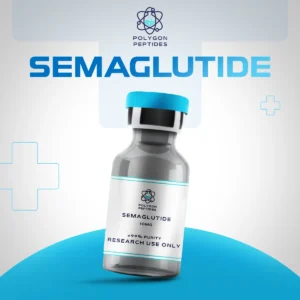
For instance, at Polygon Peptides, there is Semaglutide 15mg in the list of research peptides, while according to their website, they supply products for in-vitro research use only.
6. Purity and Analytical Testing Deserve Careful Attention
Purity is another factor to consider while evaluating research materials.
The percentage of purity may be useful, but what is even more important is how this information is obtained. An analytical test may offer the needed information for evaluation of research materials to see if their purity meets specifications.
Among useful data that could be provided by a Certificate of Analysis, we can point out:
- Product ID
- Batch/Lot No.
- Testing Lab
- Date of Testing
- Analytical Method
- Results
At Polygon Peptides, one can find a special COA checker which shows the importance of linking lot numbers with their analytical reports.
The main idea is simple: the more traceable is the information supporting the quality claim, the better.
Scientists should differentiate between the supplier’s general promotional statement and specific documentation on particular batches.
7. Supplier Transparency Supports Research Traceability
Good scientific conduct relies on traceability among other considerations. A laboratory might have to link the substance in its custody to the information about its product.
That is why it is essential to consider the openness of suppliers of semaglutide research peptides.
Openness of the supplier entails proper disclosure of information about a particular product and avoiding only marketing. Information about the product page, research purposes, and contacts must be easily available.
According to Polygon Peptides, their products are meant for in vitro laboratory research only and are neither for human consumption nor for treatment or veterinary use.
Another consideration is the regulatory framework of the UK. The MHRA provides reliable information regarding the medicines containing semaglutide, whereas GOV.UK discloses information about the medicinal purposes of GLP-1 medicines in the UK. In this regard, researchers must distinguish commercial research substances from licensed medicines.
8. Research Context Is Different from Personal Therapeutic Use
Perhaps the final point may turn out to be the key one for responsible scientific communication; a research peptide should not be considered as a medicinal substance or as a product for private use by default.
Semaglutide is a well-established ingredient in medicinal products, and licensed semaglutide-containing medicines are acknowledged by UK regulators for certain medical applications.
However, there is a difference between such a context of regulated medicines and products meant for use in laboratory research specifically.
This aspect becomes especially important considering that searches using keywords such as does semaglutide work or weight loss peptide may include all kinds of material (scientific, commercial, and medical).
Conclusion
The investigation of semaglutide research peptides entails more than simply being familiar with the name of the substance. Semaglutide is an analogue of a peptide that works on the GLP-1 receptor, and there have been numerous studies carried out on the structure of semaglutide through pharmacological and structural studies.
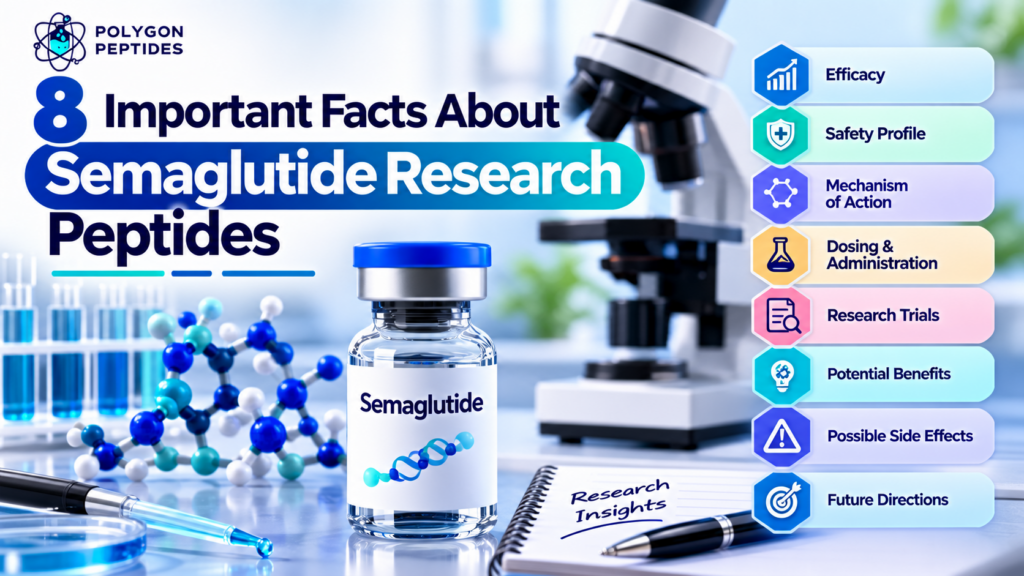
In research applications, there are eight specific factors that should be considered, namely: Peptide identity, GLP-1 receptor activity, Structure of the molecule, Structural modifications, Product specification, Analytical information, Supplier information, and Research vs. clinical application.
Thus, scientists who want to assess a semaglutide sample need to consider more than just marketing information.
FREQUENTLY ASKED QUESTIONS
Semaglutide is an analog of peptide which is acting as a GLP-1 receptor agonist and is widely researched in metabolism and molecular studies.
Yes. Semaglutide is a synthetic analog of the GLP-1 peptide.
No. Insulin and Semaglutide are two different peptide agents with different structures and mechanism of action.
It is studied in research due to studies on its interaction with the GLP-1 receptor, the structure of the peptide, molecular signalling, and other pharmacology mechanisms.