If you have seen “GLOW” listed next to other research peptides and wondered what it actually is, you are not alone. So, what is GLOW peptide? It is not a single molecule. It is a research blend that combines three separate compounds in one vial: BPC-157, TB-500 and GHK-Cu. This guide explains what each component is, what the published literature does and does not show, how GLOW differs from related blends, and how it is described for laboratory use.
Quick answer: GLOW is a three-component research blend. The GLOW 70 format is a 70mg vial containing 10mg BPC-157, 10mg TB-500 and 50mg GHK-Cu. It is sold for laboratory research only, and most of the evidence behind its components comes from cell and animal studies rather than controlled human trials.
Research use only. This article is educational and does not give dosing, usage or health advice.
So, What Is GLOW Peptide Exactly?
GLOW is a product label, not a chemical name. Suppliers use it for a pre-mixed combination, so searches such as “glow blend peptide” and “glow stack peptide” usually describe the same thing.
Because the name belongs to the blend, there is no single paper called “the GLOW study”. The sensible way to understand it is to read the literature on each of the three parts. The blend format exists mainly for convenience: one vial and one reconstitution step instead of three.
There Is No Standard GLOW Formula
This is the point most explainers skip. No pharmacopoeia defines GLOW, so the name carries no fixed specification. One supplier may list 10mg, 10mg and 50mg of the three components, while another may use different ratios or a different total mass. Some sellers also add a fourth ingredient and still call it GLOW.
The practical consequence for researchers is simple: compare composition line by line, not by name. A paper on GHK-Cu alone says nothing about what a differently proportioned blend will do.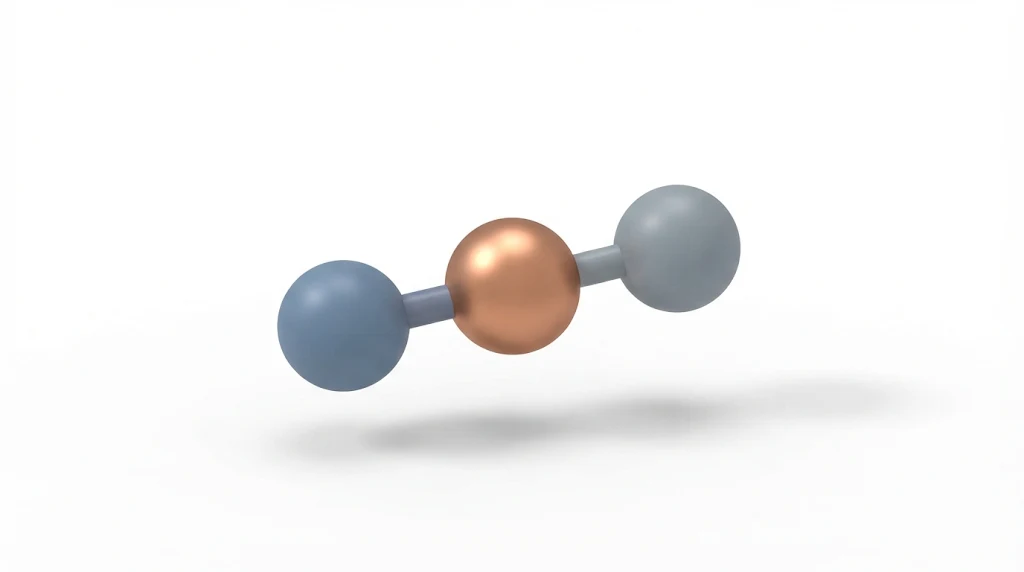
The Three Components
BPC-157
BPC-157 is a synthetic 15-amino-acid peptide derived from a sequence found in gastric juice protein. PubChem lists it as C62H98N16O22 with a molecular weight of about 1,419.5. It is one of the most discussed research peptides, yet the published base is dominated by rodent work. Recent reviews, including a 2025 systematic review in orthopaedic sports medicine and a 2025 narrative review on musculoskeletal healing, repeatedly note how thin the controlled human evidence still is. Our BPC-157 research overview covers this in more depth, and the single compound is listed as BPC-157 10mg.
TB-500
TB-500 is the name used for a thymosin beta-4 related peptide. There is a naming issue worth knowing: in analytical and anti-doping literature, “TB-500” often refers to a short fragment. Esposito et al. 2012 characterised the N-terminal acetylated 17 to 23 fragment of thymosin beta-4 found in TB-500 products (the seven-residue Ac-LKKTETQ sequence, roughly 889 g/mol), and Ho et al. 2012 described doping control analysis of TB-500 as a synthetic version of an active region of thymosin beta-4. Thymosin beta-4 itself is a 43-amino-acid protein. Always check which definition a supplier’s documentation uses. The standalone product is TB-500.
GHK-Cu
GHK is a tripeptide made of glycine, histidine and lysine (glycyl-L-histidyl-L-lysine, C14H24N6O4, about 340.38 g/mol on PubChem). GHK-Cu is its copper complex. It is the largest share of the GLOW vial by mass.
Published work on GHK-Cu spans decades. A 2026 systematic review (Najafi et al.) of GHK-Cu in topical microneedle delivery retained 64 records and concluded that the case for expanded clinical trials remains open, as human data are thin. A 2025 mouse colitis study (Mao et al.) shows how varied the model systems are. Earlier reviews by Pickart and colleagues from 2012, 2014, 2015 and 2018 form much of the historical background.
Topical GHK-Cu vs the Blend Format
GHK-Cu is often discussed in the context of skin products, which creates confusion. Studies on topical and delivery-system formats are not interchangeable with studies on other formats. A 2025 review (Ogórek et al.) examined how skin permeation of liposome-encapsulated GHK-Cu is measured, which is a good reminder that route and formulation shape what any result means. Findings from one format should not be assumed to carry over to a multi-peptide research blend.
GLOW vs KLOW vs the Wolverine Stack
Three names come up together, so here is how they relate:
| Blend | Components |
|---|---|
| Wolverine stack | BPC-157 and TB-500 |
| GLOW | BPC-157, TB-500 and GHK-Cu |
| KLOW | GLOW plus KPV |
KLOW is a related blend that adds KPV, a short peptide covered in our guide on what KPV peptide is. There are no published studies showing that adding KPV improves on GLOW, so the extra component should be read as a different formulation, not an upgrade. For the two-compound format, see the Wolverine stack guide and Wolverine Blend 20mg.
What the Evidence Does and Does Not Show
It is easy to overstate any of this, so here is a plain summary:
- Most published data on all three components are preclinical. Narrative reviews such as Cushman et al. 2024 and Mendias and Awan 2026 discuss peptide therapies for soft tissue and musculoskeletal injury while stressing the limits of the evidence.
- A 2026 rat study (Biçer et al.) examined BPC-157 and TB-500 in Achilles tendon healing. It is an animal study of two of the three components, not of the GLOW blend.
- We found no published study that evaluates the three-component GLOW blend as a combined formulation.
- Whether the three peptides interact, or how stable they are when mixed, is not established in the literature.
- Mass ratios in a blend differ from individual vials, so findings on a single component cannot be assumed to apply to the mixture.
For anyone designing laboratory work, this means the individual literature is the starting point, and any blend-specific question would need its own controls.
Regulatory Status in 2026
The FDA’s Pharmacy Compounding Advisory Committee met on July 23 to 24, 2026 to discuss several peptides for the 503A Bulks List, including BPC-157 and TB-500. According to a summary from DLA Piper, BPC-157 and TB-500 were each voted on 8 to 6 with one abstention. GHK-Cu was not among the votes and is reported to be scheduled for a later review before February 2027. Advisory committee votes are recommendations rather than final rulings, and this is a fast-moving area, so check current official sources before relying on any status.
Handling and Storage for Laboratory Work
Freeze-dried peptide is generally handled differently from reconstituted material. Our guides on how to reconstitute peptides and peptide storage explain the laboratory handling basics. The peptide calculator helps with concentration arithmetic for research planning. Always follow the storage instructions on your supplier’s documentation.
How to Read a GLOW Product Page
When comparing suppliers, look for:
- A clear statement of the mass of each component, not just the total.
- Batch-specific analytical documentation.
- Consistent naming of TB-500 (fragment or full thymosin beta-4).
- Whether any extra ingredient has been added beyond the three standard components.
- Plain research-use-only labelling.
The product listing for GLOW 70 states the 10mg, 10mg and 50mg composition.
Frequently Asked Questions
What is GLOW peptide?
GLOW is a research blend of BPC-157, TB-500 and GHK-Cu. It is not a single compound.
What is in the GLOW 70 blend?
GLOW 70 is a 70mg vial with 10mg BPC-157, 10mg TB-500 and 50mg GHK-Cu.
Is there a standard GLOW formula?
No. The name is not defined by any pharmacopoeia, so ratios and ingredients can differ between suppliers.
Is there research on the GLOW blend itself?
We found no published study that evaluates the three-component blend as a combined formulation. The literature covers the individual compounds, mostly in preclinical models.
What is the difference between GLOW and KLOW?
KLOW is a related blend that adds KPV to the GLOW components. No study shows it to be an improvement.
What is the difference between GLOW and the Wolverine stack?
The Wolverine stack contains BPC-157 and TB-500. GLOW adds GHK-Cu to those two.
Is GHK-Cu the same as GHK?
GHK is the tripeptide. GHK-Cu is the copper complex of that tripeptide.
Is GLOW sold for human use?
No. It is sold for laboratory research only.
Conclusion
So, what is GLOW peptide? It is a blend, not a molecule, built from BPC-157, TB-500 and GHK-Cu. It has no standard formula, each part has its own literature that is mostly preclinical, and the combination has not been studied as a unit. Reading the component research, checking naming and composition carefully, and keeping to research-use-only handling is the sensible approach.
This content is for educational and laboratory research purposes only. Products are not for human or veterinary use, and nothing here is medical advice.
References
- Vasireddi N, et al. Emerging Use of BPC-157 in Orthopaedic Sports Medicine: A Systematic Review. HSS J. 2025;21(4):485-495. PMID 40756949
- McGuire FP, et al. Regeneration or Risk? A Narrative Review of BPC-157 for Musculoskeletal Healing. Curr Rev Musculoskelet Med. 2025;18(12):611-619. PMID 40789979
- Chang CH, et al. Pentadecapeptide BPC 157 enhances the growth hormone receptor expression in tendon fibroblasts. Molecules. 2014;19(11):19066-19077. PMID 25415472
- Esposito S, et al. Synthesis and characterization of the N-terminal acetylated 17-23 fragment of thymosin beta 4 identified in TB-500. Drug Test Anal. 2012;4(9):733-738. PMID 22962027
- Ho EN, et al. Doping control analysis of TB-500, a synthetic version of an active region of thymosin β4, in equine urine and plasma by LC-MS. J Chromatogr A. 2012;1265:57-69. PMID 23084823
- Biçer O, et al. Effects of BPC-157 and TB-500 on Achilles tendon healing in rats. Jt Dis Relat Surg. 2026;37(3):822-837. PMID 42542926
- Tewari K, et al. Peptide Supplements and Their Therapeutic Applications in Sports Medicine. Am J Sports Med. 2026. PMID 42578445
- Mendias CL, Awan TM. Safety and Efficacy of Approved and Unapproved Peptide Therapies for Musculoskeletal Injuries and Athletic Performance. Sports Med. 2026;56(8):1921-1935. PMID 41966639
- Najafi N, et al. A Systematic Review of the Mechanisms and Therapeutic Applications of GHK-Cu in Topical Microneedle Delivery. Arch Intern Med Res. 2026;9(3):269-293. PMID 42787770
- Mao S, et al. Exploring the beneficial effects of GHK-Cu on an experimental model of colitis. Front Pharmacol. 2025;16:1551843. PMID 40672369
- Ogórek K, et al. Are We Ready to Measure Skin Permeation of Modern Antiaging GHK-Cu Tripeptide Encapsulated in Liposomes? Molecules. 2025;30(1):136. PMID 39795193
- Cushman CJ, et al. Local and Systemic Peptide Therapies for Soft Tissue Regeneration: A Narrative Review. Yale J Biol Med. 2024;97(3):399-413. PMID 39351323
- Pickart L, Margolina A. Regenerative and Protective Actions of the GHK-Cu Peptide in the Light of the New Gene Data. Int J Mol Sci. 2018;19(7):1987. PMID 29986520
- Pickart L, et al. GHK Peptide as a Natural Modulator of Multiple Cellular Pathways in Skin Regeneration. Biomed Res Int. 2015;2015:648108. PMID 26236730
- Pickart L, et al. GHK and DNA: resetting the human genome to health. Biomed Res Int. 2014;2014:151479. PMID 25302294
- Pickart L, et al. The human tripeptide GHK-Cu in prevention of oxidative stress and degenerative conditions of aging. Oxid Med Cell Longev. 2012;2012:324832. PMID 22666519
- PubChem: BPC-157 (CID 9941957), GHK (CID 73587).
- U.S. FDA. July 23 to 24, 2026 Meeting of the Pharmacy Compounding Advisory Committee.