If you have searched is tirzepatide a peptide, the short answer is yes. It is a synthetic peptide of 39 amino acids with a fatty acid chain attached, and it is built to act on two gut-hormone receptors at once. This guide explains what that structure means, how it differs from a small-molecule drug and from semaglutide, what the research literature calls it, and where it stands in the UK.
Quick answer: Yes. Tirzepatide is a modified peptide of 39 amino acids with a fatty diacid side chain. It activates the receptors for the incretin hormones GIP and GLP-1. PubChem lists it as C225H348N48O68, about 4,813 Da. In the UK it is prescription-only.
Everything below is written for laboratory researchers and general readers. It covers chemistry and regulation, not dosing or personal use, and nothing on this page is medical advice.
What Makes Something a Peptide?
A peptide is a chain of amino acids joined by peptide bonds. Short chains are usually called peptides and long, folded chains proteins, although the boundary is loose. Many hormones, including insulin, GLP-1 and GIP, are peptides.
Natural peptides are often broken down quickly by enzymes, so drug designers modify them to last longer. Tirzepatide is one such engineered peptide, which is why it is described as synthetic and modified rather than natural.
Most traditional drugs are small molecules, often under 500 daltons. At roughly 4,800 daltons, tirzepatide is about ten times larger, and that size explains many of its practical properties. At the other end of the scale, a three-residue fragment such as the one covered in our guide on what KPV peptide is weighs only a few hundred daltons.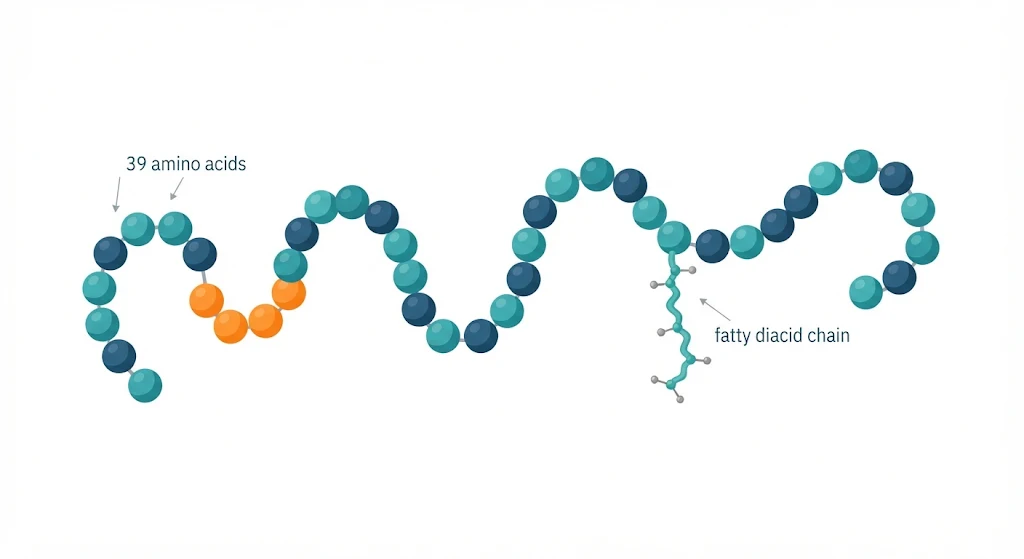
Tirzepatide Structure in Plain English
Tirzepatide appears in the research literature under the code LY3298176. The discovery paper (Coskun et al. 2018) describes it as a 39-amino-acid linear peptide with these features:
- Two non-coded amino acids, both Aib (alpha-aminoisobutyric acid), at positions 2 and 13.
- An amidated C-terminus.
- A C20 fatty diacid attached through a linker to the lysine at position 20.
Those details matter because they show the molecule is not simply a natural hormone. Natural peptides are built only from the 20 standard amino acids, while tirzepatide carries non-standard residues and a lipid side chain added on purpose. PubChem lists the compound under CID 156588324.
The Fatty Acid Chain and Albumin Binding
Natural incretin hormones are cleared from circulation quickly. The fatty diacid on tirzepatide is the part designed to deal with that. According to the discovery paper, this acylation enables binding to albumin, a large protein that circulates in blood.
Albumin binding is a well-established way to slow the loss of a peptide, because a molecule attached to albumin is cleared more slowly than a free one. It is also one reason the molecular weight is higher than the amino acid chain alone would suggest. The full text of the discovery paper is the best place to read the original description.
Why Peptides Like This Are Injected
Peptides are generally broken down by digestive acids and enzymes, much like the protein in food, and large molecules also cross the gut wall poorly. That is why most peptide medicines are given by injection rather than swallowed. The NHS describes tirzepatide as an injection. This is a property of peptide chemistry, not a rule written specifically for tirzepatide.
What “Dual Agonist” Means
An agonist is a molecule that activates a receptor. GIP and GLP-1 are both incretins, which are hormones released from the gut after food. In the discovery paper, GIP is described as an incretin secreted from K cells in the upper small intestine in response to food. GLP-1 is the second incretin, and it is the target that earlier peptides such as semaglutide were designed around.
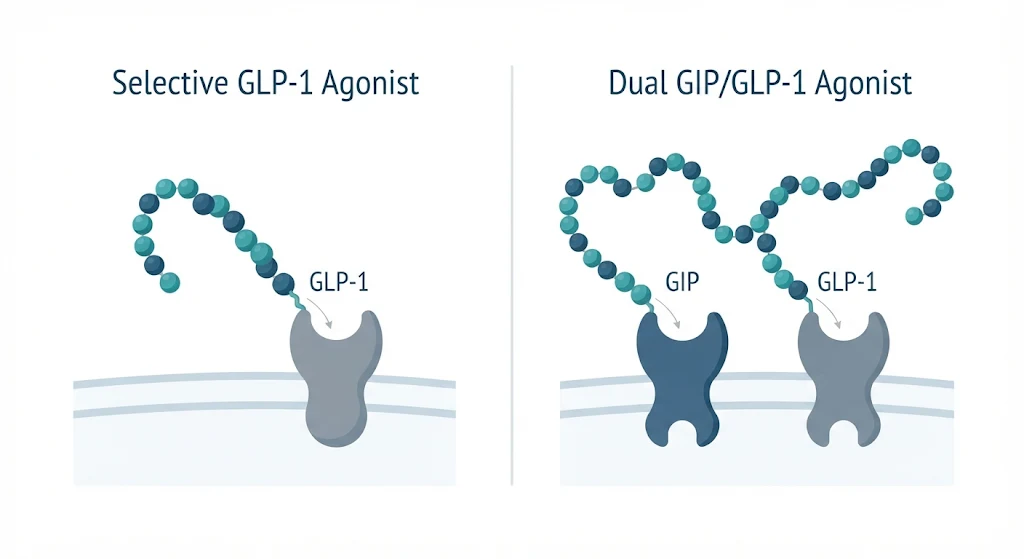
Tirzepatide is designed to activate both receptors, which is why it is called a dual agonist. Reviews such as Cho et al. 2023 describe it as a GLP-1 and GIP dual agonist, and 2026 reviews, including Di Martino and De Rosa on peptide therapeutics targeting GPCRs and Bawadi et al. comparing semaglutide, liraglutide and tirzepatide, continue to discuss it in this class. This article does not cover clinical outcomes, because the aim here is structure.
Peptide vs Small Molecule: A Quick Comparison
| Feature | Typical small molecule | Tirzepatide |
|---|---|---|
| Size | Under about 500 Da | About 4,813 Da |
| Building blocks | Varied chemical groups | Amino acids plus a fatty diacid chain |
| Usual delivery | Often oral | Injection |
| Manufacturing | Chemical synthesis | Peptide synthesis |
Tirzepatide vs Semaglutide
Both are modified peptides built on similar design logic. According to the semaglutide discovery paper (Lau et al. 2015), semaglutide has two amino acid substitutions compared with human GLP-1 (Aib at position 8 and Arg at 34) and is derivatised at lysine 26, with a fatty acid moiety chosen to raise albumin affinity. Tirzepatide also uses Aib substitutions and a fatty diacid, but on a 39-amino-acid backbone that engages the GIP receptor as well.
PubChem lists semaglutide as C187H291N45O59 with a molecular weight of about 4,114, compared with about 4,813 for tirzepatide.
| Tirzepatide | Semaglutide | |
|---|---|---|
| Formula (PubChem) | C225H348N48O68 | C187H291N45O59 |
| Molecular weight | About 4,813 | About 4,114 |
| Receptors activated | GIP and GLP-1 | GLP-1 |
| Class | Dual agonist | Single agonist |
| Documented modifications | Aib at 2 and 13, C20 fatty diacid at lysine 20, amidated C-terminus | Aib at 8, Arg at 34, fatty acid at lysine 26 |
Pharmacologically, tirzepatide acts on both GIP and GLP-1 receptors, while semaglutide acts on the GLP-1 receptor only. Our research catalogue lists Semaglutide 15mg separately, for laboratory use only.
Is Tirzepatide a Peptide or a GLP-1 Drug?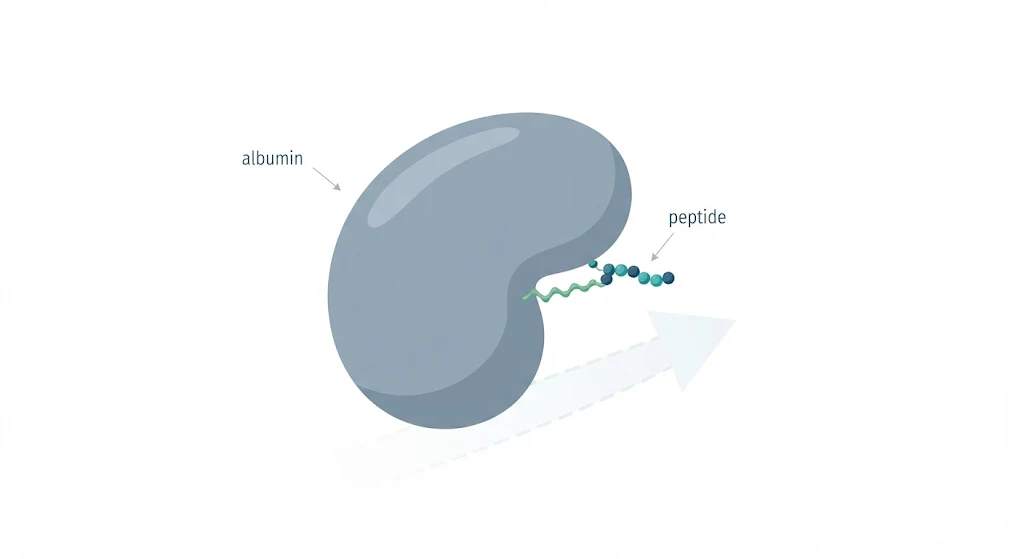
This is a common false choice. “Peptide” describes the molecule’s structure: a chain of amino acids. “GLP-1 agonist” or “dual agonist” describes what it does at receptors. So which label is right, peptide, GLP-1 drug, or both? Both. The two labels answer different questions, one about what it is made of and the other about what it targets.
The NHS uses the second kind of label, calling it a GLP-1/GIP agonist. That wording does not contradict the first. It simply describes function rather than chemistry.
Related Compounds
Tirzepatide is one of several incretin-based peptides. Retatrutide is a triple agonist (GIP, GLP-1 and glucagon receptors) that has been reviewed in the research literature, for example by Jakubowska and colleagues. It is a separate compound with its own structure.
| Compound | Receptors activated |
|---|---|
| Semaglutide | GLP-1 |
| Tirzepatide | GIP and GLP-1 |
| Retatrutide | GIP, GLP-1 and glucagon |
Peptides such as BPC-157 belong to a different research category and are not incretin agonists. Our BPC-157 research overview shows how differently those compounds are described in the literature.
UK Status
The NHS describes tirzepatide as a GLP-1/GIP agonist medicine that is only available with a prescription, either NHS or private. The best-known brand is Mounjaro, and the medicine comes as an injection. US sources list the same molecule under a second brand name, Zepbound, so the two brands refer to one peptide.
The NHS advises that anyone who decides to get a private prescription should buy from a registered pharmacy, because some websites sell fake weight loss medicines. If you see tirzepatide offered outside a prescription pathway, treat it with caution and check current rules with official UK sources.
| Prescription medicine | Research-grade listing | |
|---|---|---|
| Route | NHS or private prescription | Laboratory supply |
| Intended use | Medical, under a prescriber | Laboratory research only |
| Named brand | Yes, such as Mounjaro | No, usually a catalogue code |
| Suitable for personal use | Only as prescribed | No |
Research-Grade Listings: What to Check
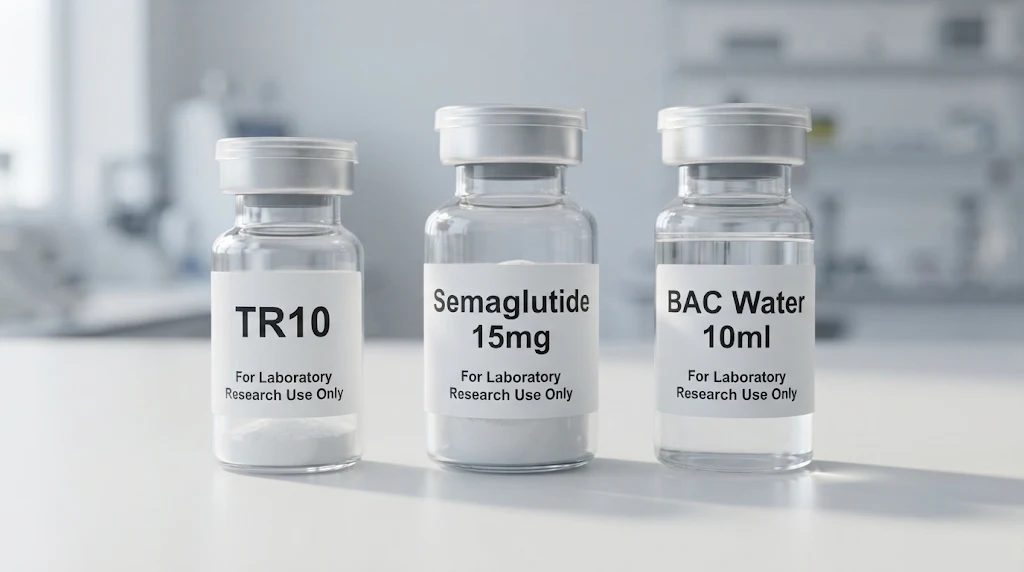
Some research suppliers use short catalogue codes. On this site, TR10 is the code for a research-grade tirzepatide listing, described as a 39-amino-acid dual GIP and GLP-1 receptor agonist. It is sold for laboratory research only. A code is a naming convention, not a drug name, and a research listing is not a prescription medicine.
When comparing any research peptide listing, look for:
- The peptide named in full, not only a code.
- The molecular weight and formula, which should match the PubChem values above.
- Batch-specific analytical documentation.
- Plain research-use-only labelling.
For concentration arithmetic in laboratory planning, see the peptide calculator. The guides on how to reconstitute peptides and peptide storage cover handling basics, BAC Water 10ml is the diluent many laboratories use for reconstitution, and the supplier’s documentation always comes first.
Frequently Asked Questions
Is tirzepatide a peptide?
Yes. It is a modified peptide of 39 amino acids with a fatty diacid side chain.
Tirzepatide is it a peptide or a hormone?
It is a synthetic peptide designed to act on hormone receptors. It is not itself a natural hormone.
Tirzepatide: peptide or GLP-1?
Both labels apply. Peptide describes its structure, and GLP-1 and GIP agonist describes its receptor action.
Is tirzepatide the same as semaglutide?
No. Both are modified peptides, but tirzepatide acts on GIP and GLP-1 receptors, while semaglutide acts on GLP-1 only. Their molecular weights also differ.
Is tirzepatide the same as Mounjaro?
Tirzepatide is the active peptide, and Mounjaro is a brand name for the prescription medicine that contains it, according to the NHS.
What peptides are similar to tirzepatide?
Semaglutide and retatrutide are the closest incretin-based comparisons. Semaglutide acts on GLP-1 only, and retatrutide adds glucagon receptor activity. Peptides such as BPC-157 are not incretin agonists.
Why is the molecular weight so high?
Because of the 39-residue backbone and the attached fatty diacid side chain.
Why are peptides like tirzepatide injected?
Peptides are generally broken down in the digestive system, which is why oral delivery is difficult for them.
Can I buy tirzepatide in the UK without a prescription?
The NHS states it is only available with a prescription. Research-grade listings are for laboratory use and are not a substitute for medical supervision.
 Conclusion
So, is tirzepatide a peptide? Yes. It is a 39-amino-acid chain with non-standard residues and a fatty diacid side chain, active at two incretin receptors. Knowing that structure helps explain why it differs from small-molecule drugs and from related peptides like semaglutide. In the UK it remains a prescription medicine, and research-grade material is for laboratory work only.
This content is educational only and is not medical advice. Research-grade products are for laboratory use only and are not for human or animal consumption.
References
- Coskun T, et al. LY3298176, a novel dual GIP and GLP-1 receptor agonist for the treatment of type 2 diabetes mellitus: From discovery to clinical proof of concept. Mol Metab. 2018;18:3-14. PMID 30473097, full text
- Cho YK, et al. The Cardiovascular Effect of Tirzepatide: A Glucagon-Like Peptide-1 and Glucose-Dependent Insulinotropic Polypeptide Dual Agonist. J Lipid Atheroscler. 2023;12(3):213-222. PMID 37800107
- Jakubowska A, et al. The Road towards Triple Agonists: GLP-1, GIP and Glucagon Receptor, An Update. Endocrinol Metab (Seoul). 2024;39(1):12-22. PMID 38356208
- Di Martino S, De Rosa M. Peptide-based therapeutics targeting GPCRs: recent applications in the treatment of metabolic disorders. Front Pharmacol. 2026;17:1930768. PMID 42819631
- Bawadi H, et al. Impact of Semaglutide, Liraglutide and Tirzepatide on Cardiometabolic Outcomes: A Comparative Narrative Review. Endocrinol Diabetes Metab. 2026;9(5):e70338. PMID 42747132
- Lau J, et al. Discovery of the Once-Weekly Glucagon-Like Peptide-1 (GLP-1) Analogue Semaglutide. J Med Chem. 2015;58(18):7370-7380. PMID 26308095
- PubChem: tirzepatide (CID 156588324), semaglutide (CID 56843331).
- NHS. Tirzepatide: a medicine to manage type 2 diabetes and treat obesity.